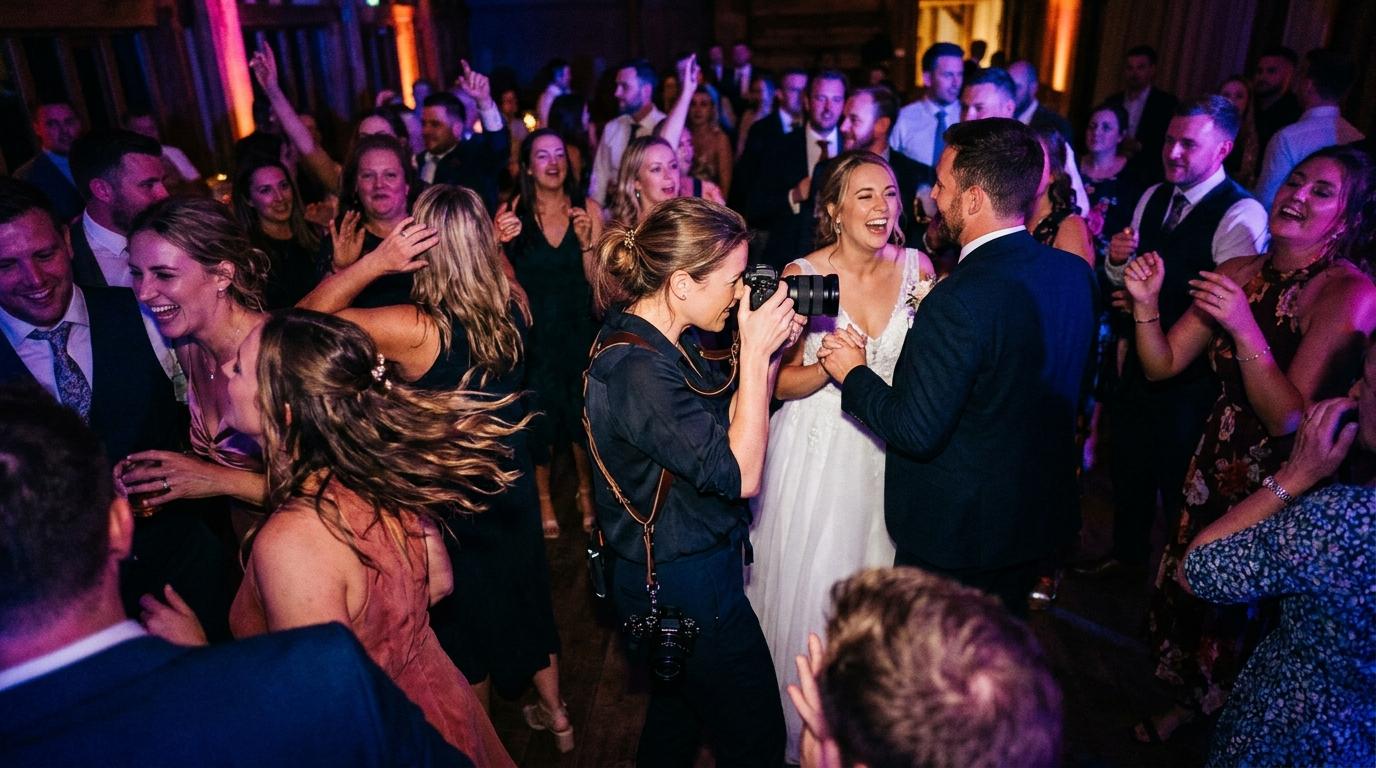
The best camera for event photography 2026 is a full-frame mirrorless body with fast subject-tracking autofocus, dual card slots and a stacked or partially stacked sensor. For most photographers that means the Sony A7 V, Canon EOS R6 Mark III or Nikon Z6III, paired with an f/2.8 zoom. Specialists in very dark rooms or fast sports may prefer a different body.
TL;DR
- For conferences, corporate events, parties and weddings, the Sony A7 V, Canon EOS R6 Mark III and Nikon Z6III are the best all-round bodies.
- For indoor sports, night festivals and arenas, step up to a stacked-sensor flagship such as the Sony A1 II, or choose the Sony A7S III if darkness is your main enemy.
- A fast lens and a clean post-event workflow matter as much as the body, so budget for both before you chase the newest sensor.
Best Camera for Event Photography 2026: What Is the Short Answer?
The short answer is that three full-frame mirrorless bodies cover about 90% of event work: the Sony A7 V, the Canon EOS R6 Mark III and the Nikon Z6III. Each pairs a 24 to 33 megapixel sensor with modern AI subject detection, dual card slots and strong high-ISO files.
Editorial roundups point the same way. PCMag's tested camera list features the Sony a7 V among its full-frame picks, and the event-focused guide from Koma Productions also leads with it for corporate and conference coverage. Prices and availability shift quickly, so confirm current specs on the manufacturer pages before you buy.
If you shoot a mix of venues, pick the system whose lenses and flashes you already own. Switching brands for a marginal sensor gain rarely pays back within a season.
What Specs Actually Matter for Low-Light Events?
Six things matter most at dim events: high-ISO image quality, autofocus that works in low contrast, dual card slots, battery life, a fast readout from the sensor, and ergonomics for long days. Megapixel count and video specs are secondary unless you also deliver video.
Here is how to think about each one when you are standing in a dark ballroom:
- High-ISO performance: Full-frame sensors give you roughly a stop of headroom over APS-C, which means ISO 6400 to 12800 stays usable when the room is lit only by stage wash and uplights.
- Low-light autofocus: Look for bodies that track eyes and faces down to very dim light. Misfocused frames cost you more time than noise ever will.
- Dual card slots: One failed card during a keynote or a final heat is a client-losing event. Write to two cards every time.
- Sensor readout speed: Stacked and partially stacked sensors cut rolling-shutter distortion and banding, which matters under LED walls and pulsing festival lighting.
- Battery and heat: Eight-hour days of continuous shooting punish small batteries, so carry spares and consider a grip.
Koma Productions lists the same priorities in its event camera guide: low-light performance, reliable autofocus, battery life, dual card slots and portability.
Which Camera Is Best for Conferences, Corporate Events and Parties?
For conferences, corporate events and parties, the Sony A7 V and Canon EOS R6 Mark III are the safest choices, with the Nikon Z6III as the best value. All three balance resolution, burst speed and low-light autofocus without the cost or file size of a flagship.
Sony A7 V. Sony's latest all-rounder uses a 33-megapixel partially stacked sensor and AI-assisted subject recognition, and it launched at roughly $2,900. It is the strongest pick if you want the deepest lens catalog, including fast third-party primes and zooms, and Sony's mature flash ecosystem.
Canon EOS R6 Mark III. Canon's update targets event shooters directly, with a higher-resolution sensor than its predecessor, fast bursts and better video. It lands around $2,800 and benefits from Canon's skin-tone rendering, which keeps portraits of attendees looking natural under mixed lighting with minimal editing.
Nikon Z6III. Its 24.5-megapixel partially stacked sensor, excellent viewfinder and typically lower street price make it the value leader. If your budget is tight and you want pro-level reliability, it is hard to beat.
Whichever you choose, the room matters as much as the body. Our guide to handling difficult indoor venue lighting without flash drama covers exposure tactics that work with all three, and the conference photography shot list for solo photographers shows what to capture once your gear is ready.
Which Camera Is Best for Indoor Sports and Night Festivals?
For indoor sports and night festivals, a stacked-sensor flagship such as the Sony A1 II is the best camera, because fast sensor readout and elite subject tracking matter more than raw resolution. Canon's and Nikon's stacked-sensor bodies serve the same role inside their systems.
Gyms, arenas and festival stages combine fast action with poor and unstable light. A stacked sensor reads out so quickly that distortion and flicker banding drop sharply compared with a conventional sensor, so you can shoot silently with the electronic shutter without worrying about warped limbs or stripes across a frame.
The trade-off is cost, since flagships like the Sony A1 II sit at roughly $6,500 to $7,000. If you shoot youth leagues or community events, a mid-priced body with a fast prime and a monopod will deliver most of the keepers at a fraction of the price. For workflow ideas on that segment, see our breakdown of sports photo ordering software for youth leagues.
When Is the Sony A7S III Still the Right Low-Light Camera?
The Sony A7S III is still the right choice when your events are genuinely dark and you also shoot video, such as nightclub nights, black-box theaters and after-dark brand activations. Its 12-megapixel sensor produces exceptionally clean files at very high ISO.
The catch is resolution and age. Twelve megapixels limits cropping, and the body now costs about as much as newer, more versatile cameras at roughly $3,500 to $3,700. If you rarely push beyond ISO 12800, the A7 V, R6 Mark III or Z6III will serve you better across the whole calendar.
Is a Compact Camera Good Enough for Event Photography?
A premium compact is good enough for casual coverage, backup duty and venues that restrict large cameras, but it will not match a full-frame body with a fast lens in dim rooms. One-inch sensors and slower zooms lose a stop or two of light.
Canon Rumors' compact camera guide for concerts and events picks the Sony RX100 VII as best overall, while noting its lens narrows to f/4.5 at the telephoto end, which hurts in dark venues. Its alternative, the Canon PowerShot G7 X Mark III, offers an f/1.8-2.8 lens but a shorter zoom range.
If you want a pocketable second body for candid work, our review of the Ricoh GR III Monochrom shows where a compact can shine as a personal-project camera. For paid coverage, keep a full-frame body as your primary.
Does the Lens Matter More Than the Camera Body in Low Light?
Yes, in most cases the lens matters more. Moving from an f/4 zoom to an f/2.8 zoom gives you a full stop of light, and an f/1.4 prime gives you two, which is a bigger improvement than most generation-to-generation sensor upgrades.
A practical low-light kit looks like this:
- A 24-70mm f/2.8 zoom for wide and medium coverage of rooms, stages and groups.
- A 70-200mm f/2.8 zoom for speakers, performers and sports from a distance.
- A 35mm or 50mm f/1.4 prime for dim receptions, dinners and candid moments.
For a deeper look at glass choices, read our guide to the best lenses for wedding photography in 2026, since the same fast-zoom-plus-prime logic applies to any dark venue. To compare bodies across more genres, our broader best cameras of 2026 roundup is a useful companion.
How Do You Handle the Files After a Low-Light Shoot?
High-ISO event work produces more frames and noisier files, so you need a fast culling pass and a reliable denoise step. Plan the post-shoot workflow when you choose the camera, because 4,000 to 6,000 frames from a single festival or conference is normal.
Start with AI-assisted selection to remove blinks, misfocus and duplicates, as outlined in our guide to AI photo culling for high-volume events. Then run noise reduction only on the keepers; our comparison of Topaz Photo AI, Lightroom Denoise and ON1 NoNoise shows which tool fits which ISO range.
The last step is getting images into people's hands before the event buzz fades. Attendees want their own photos within hours, not a single link to a 3,000-image gallery, which is why tools like FindMe Photo let guests find themselves with a selfie after you export from Lightroom Classic. For more on that stage, see our guide to event photo delivery to attendees.
How Should You Choose Your Event Camera in 2026?
Choose by your most demanding venue, not your average one, then confirm the body fits your existing lenses and budget. A short checklist keeps the decision grounded:
- Mostly conferences, corporate and parties: Sony A7 V, Canon EOS R6 Mark III or Nikon Z6III.
- Mostly indoor sports, arenas and big festival stages: Sony A1 II or the stacked-sensor flagship in your current system.
- Mostly dark venues plus video: Sony A7S III.
- Tight budget: A used or discounted previous-generation full-frame body with an f/2.8 zoom beats a new entry-level body with a kit lens.
Rent before you buy when you can. A weekend with a candidate body in your hardest room will tell you more than any spec sheet, and it protects you from a costly mistake as new models arrive through 2026.
Whatever you shoot with, your reach depends on how easily people can find and share their photos. FindMe Photo lets you upload once, and every attendee finds their own photos in seconds with a selfie, so your best low-light work gets seen by the whole event instead of sitting in a folder.
Frequently asked questions
What is the best camera for event photography in 2026?
For most working photographers it is a full-frame mirrorless body with fast subject-tracking autofocus, dual card slots and a stacked or partially stacked sensor. The Sony A7 V, Canon EOS R6 Mark III and Nikon Z6III all fit that description, so the right choice usually comes down to your existing lenses and flash system.
Is a full-frame camera necessary for low-light event photography?
It is not strictly necessary, but full-frame sensors give you roughly a stop of cleaner high-ISO performance than APS-C and one-inch sensors. In dim ballrooms, theaters and night festivals that margin often decides whether a frame is usable without heavy noise reduction.
How many megapixels do you need for event photography?
Between 24 and 33 megapixels is the sweet spot for most event work. It is enough for large prints and tight crops, while keeping files small enough to cull, edit and upload quickly after a shoot that can produce thousands of frames.
Is the Sony A7S III still worth buying for events?
Yes, if you shoot mostly in very dark venues or combine photo and video. Its 12-megapixel sensor remains a benchmark for clean high-ISO files, but its lower resolution and age mean newer 24 to 33 megapixel bodies are the better all-rounders.
Should I spend more on a camera body or a lens for low-light events?
Spend on the lens first if you already own a competent mirrorless body. A fast f/2.8 zoom or f/1.4 prime gains you one to two stops of light, which is a bigger low-light improvement than most generation-to-generation body upgrades.
Browse by topic
The new photo gallery for pro event photographers.
Expand your reach: 10× more guests open your galleries.
Why the whole room opens it
One link per event. No signup, no login, no app for your guests. Designed for mobile and access on the go.

Their face is their password. A selfie finds their photos in under 2 seconds. Selfie Search comes in every plan, including Free+.
They share it, or buy from your store. Your prices, your brand, your customers. Set up your store for digital and/or print copies connected to your Stripe.
Open your Free+ account today — every Growth feature free for 30 days — and onboard the fastest, coolest way to share your galleries.