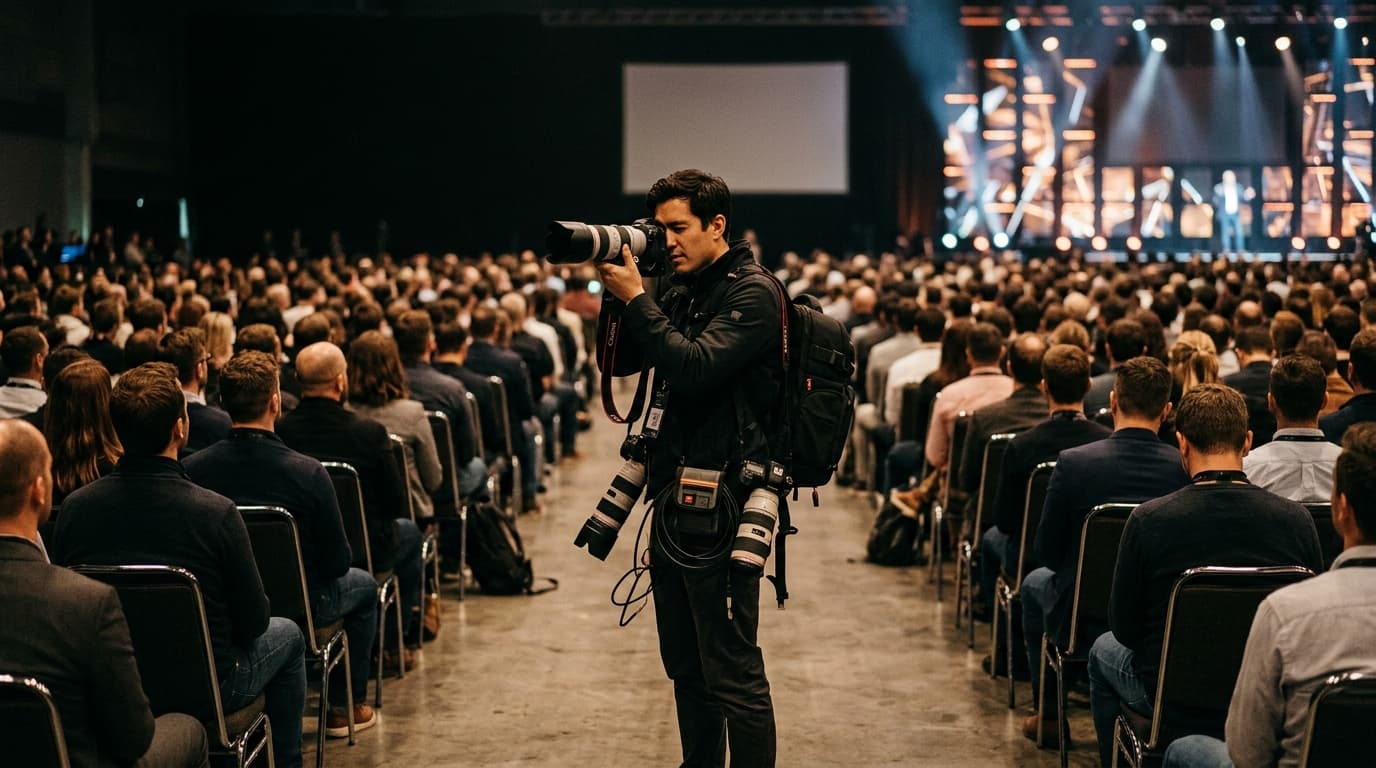
A realistic conference photography shot list for one photographer covers five zones in priority order: the empty room and branding before doors open, the keynote, sponsor and booth assets, breakout sessions in short rotating passes, and networking or candid moments filled in between. The key skill isn't shooting faster, it's deciding what to skip.
TL;DR
- Shoot the empty venue, signage, and sponsor branding first, before the room fills and clutter takes over.
- Treat breakout sessions as short rotating passes, not full sit-throughs, since you can't be in two rooms at once.
- Build in 10 to 15 minutes of buffer around every keynote and headshot block, because conference schedules run late almost every time.
What Should Be on a Conference Photography Shot List?
A conference photography shot list should be organized by phase, not by subject, because a solo photographer moves through a conference in phases rather than jumping randomly between people and rooms. The five phases that matter most are venue and branding, keynote and stage, sponsor assets, breakouts, and networking or headshots.
Organizing this way solves the biggest problem solo shooters run into: forgetting an entire category because they got absorbed in one moment. A written list, checked off phase by phase, keeps you moving even when the schedule shifts. For corporate clients specifically, this structure also happens to match what marketing teams actually request, which makes the gallery easier to hand off when you're done. If you're trying to land more of these bookings in the first place, how event organizers choose photographers is worth reading before you build your next proposal.
How Do You Cover a Keynote Session Alone?
You cover a keynote alone by shooting it in three passes instead of trying to get every angle in one continuous take: a wide hero frame that shows the stage, screen, and audience together, then a tighter set of speaker portraits from the side aisle, then a final wide from the back showing crowd size. Doing all three within the first ten minutes gives you flexibility to leave for other coverage if needed.
The wide hero frame matters most to marketing teams because it visually proves attendance, which they use in sponsor recaps and next year's sales deck. Speaker portraits should be shot on a longer lens from a side angle so you're not blocking sightlines, and you want at least a few frames where the speaker's hands and expression land together. Skip the temptation to stay for the full session once you have these three passes covered; a breakout track is probably already running.
What About Breakout Sessions You Can't Attend?
You can't attend every breakout session as a solo photographer, so the realistic move is to cover each room in a short 10 to 15 minute pass rather than skipping tracks entirely or trying to camp in one room. Rotate through the tracks your client flagged as highest priority first, and treat the rest as optional.
Inside each pass, grab a wide shot of the room and speaker, a few audience reaction frames, and any visible branding or slide content that ties back to a sponsor. Then move on. This is the point in the day where a written shot list earns its keep, because it stops you from lingering in a room that's already covered while a different track goes completely unshot.
How Do You Capture Networking and Candid Moments Efficiently?
Networking and candid moments are best captured during the natural gaps in the schedule, like coffee breaks, the lunch room, and the last 20 minutes before doors close, rather than as a dedicated block of time. These moments fill out the emotional side of the gallery and are usually the photos attendees are most eager to find themselves in and share.
Work the room in loops instead of standing still. Move from the coffee station to the expo floor to the seating lounge, watching for genuine conversation, laughter, or a handshake between an attendee and a sponsor rep. These are also the images most likely to get shared on LinkedIn after the event, which is exactly the kind of organic reach that makes a client rebook you. If engagement and reshares matter to your client's marketing team, tracking event photography engagement metrics will help you show them the payoff.
Should You Offer Headshots at a Conference?
Offering headshots at a conference is worth it when the client asks for them or when you have a natural lull in the schedule, but it should never come at the cost of your keynote or breakout coverage. If headshots are booked as a standalone service, treat them as their own block with a dedicated backdrop and a clear start and end time, and staff a second shooter if the volume is high.
The biggest risk with solo headshot coverage is scope creep. A five-minute favor for one attendee turns into a line of twelve people, and suddenly you've missed the afternoon panel. Set the expectation with your client in advance, ideally in the contract, so headshots don't silently expand past their allotted window. Getting the scope right at the contract stage, as covered in this guide to event photography contracts and usage rights, saves this argument before it starts.
How Do You Triage Coverage When You Can't Be in Two Rooms at Once?
You triage conference coverage by ranking every simultaneous conflict against three questions: which room has the higher-profile speaker or sponsor, which content is more likely to be reused in marketing, and which room can be caught later in a recap moment instead of live. When two things collide, the answer is almost always to protect the keynote or the sponsor-facing content first.
Build this ranking into your pre-event conversation with the client, not on the fly during the event itself. Ask directly which breakout track matters most if a conflict comes up, and get it in writing. A raymondchou.ca guide on corporate event photography shot lists breaks this down by marketing phase, which is a useful framework to walk a client through before the day begins so triage decisions are already made in advance.
How Do You Deliver Conference Photos Fast Without Extra Work?
You deliver conference photos fast by exporting directly to a shared gallery the moment you're done editing, and by letting attendees find their own photos instead of manually sorting and sending files yourself. This is where most solo photographers lose hours they don't have, especially on a multi-day conference where day-two attendees want their day-one photos before they even ask.
Platforms built for this, including FindMe Photo, export straight from Lightroom Classic and let every attendee search for their own face instead of waiting on you to tag or share individual images. That single change turns a delivery bottleneck into something that happens automatically overnight. If you're still comparing gallery tools for this kind of volume, the best gallery software for corporate event photographers is a good next read, and if you want the delivery expectations attendees actually have, how to deliver corporate event photos to every attendee covers the turnaround numbers clients now expect.
Fast, self-serve delivery is also what turns a one-day conference booking into a repeat contract, since a client who watches attendees actually engage with their own photos is a client who books you again next year. That kind of outcome is worth building into how you pitch every future conference, not just how you shoot it. Turning event clients into retainer clients walks through how to make that conversion stick.
Ready to stop losing hours to manual sorting after a conference wraps? FindMe Photo lets every attendee find and share their own photos in seconds, straight from your Lightroom Classic export.
Frequently asked questions
How many photos should I deliver from a one-day conference?
Most solo shooters deliver 400 to 800 edited images from a single eight-hour conference day, depending on how many breakout tracks run and how much networking coverage the client wants. Volume matters less than making sure every sponsor logo, speaker, and attendee group shot from your list is represented at least once.
Can one photographer really cover a multi-track conference?
Yes, but not by trying to be everywhere. One photographer covers a multi-track conference by front-loading the keynote and sponsor shots, then rotating through breakouts in short 10 to 15 minute passes instead of camping in one room for a full session.
What is the most commonly missed shot at a conference?
Clean, legible sponsor signage and booth activations before doors open are the shots photographers most often skip, and they are usually the ones a marketing team asks for first. Grab them during setup, before attendees and clutter fill the space.
Should I bring a second shooter for a conference?
A second shooter helps most when a keynote and a high-value breakout run at the same time, or when headshots are booked alongside general coverage. If budget only allows one photographer, build your shot list around triage instead of trying to double your speed.
How fast should conference photos be delivered to attendees?
Same-day or next-morning delivery is becoming the standard expectation, especially for multi-day conferences where attendees want photos from day one before day two starts. Tools that let each attendee find their own photos by face instead of scrolling a shared gallery speed this up significantly.
Browse by topic
The new photo gallery for pro event photographers.
Expand your reach: 10× more guests open your galleries.
Why the whole room opens it
One link per event. No signup, no login, no app for your guests. Designed for mobile and access on the go.

Their face is their password. A selfie finds their photos in under 2 seconds. Selfie Search comes in every plan, including Free+.
They share it, or buy from your store. Your prices, your brand, your customers. Set up your store for digital and/or print copies connected to your Stripe.
Open your Free+ account today, with the top premium features included, and onboard the fastest, coolest way to share your galleries.