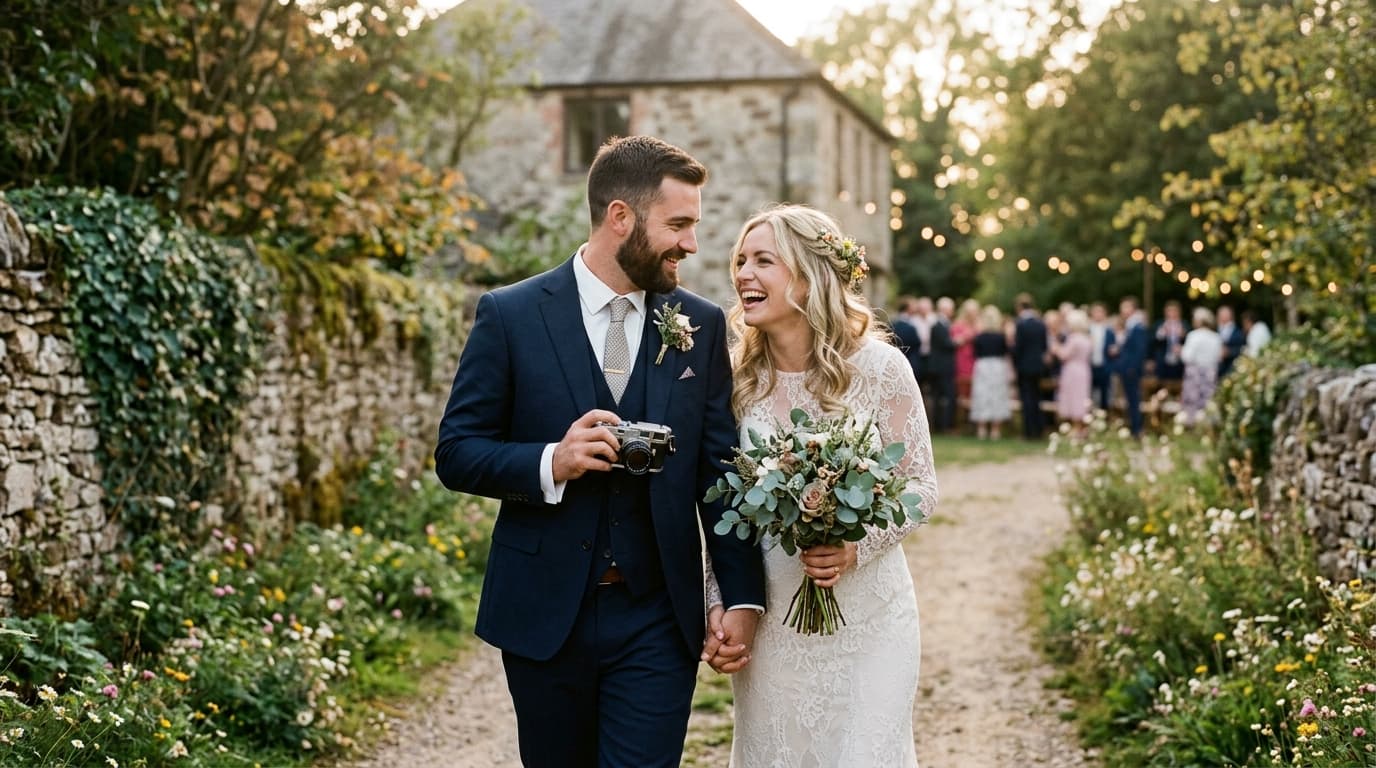
The film wedding photography trend in 2026 is real, it's growing, and couples are explicitly requesting it during consultations. If you're a wedding photographer wondering whether to add film to your offering — or how to talk about it when clients bring it up — this post breaks down exactly what's driving the demand, what it means for your workflow, and how to position yourself to benefit from it.
TL;DR
- Gen Z couples are actively requesting grain, texture, and analog warmth as a reaction to over-polished digital imagery.
- Hybrid shooting (film for key moments, digital for speed) is the most practical way to meet demand without overhauling your entire workflow.
- Film adds a premium positioning opportunity — but only if you genuinely love the medium and can back it up with real work.
The Film Wedding Photography Trend in 2026: What's Actually Driving It
Film photography never fully disappeared — it just stopped being the default. Now it's becoming a deliberate, premium choice, and the couples driving that choice are younger than you might expect. Gen Z couples, many of whom grew up surrounded by hyper-curated digital content, are craving something that feels less produced and more human.
The grain, the softness, the slight unpredictability of an analog frame — these aren't flaws to today's couples. They're the whole point. As photographer Emily Choy wrote for the Los Angeles Times in July 2025, “Film offers something digital cannot fully replicate: depth, emotion, and nostalgia. It is not a passing trend. It is a timeless medium.”
That's not just poetic language — it reflects what photographers are hearing in real consultations. Couples are showing up to meetings with film reference images saved on their phones, asking specifically about 35mm, Kodak Portra, and analog warmth. They're not confused about what they want. They've done their research.
Why Film Looks Different — and Why That Difference Matters
Digital cameras have become extraordinarily capable. Modern sensors handle dynamic range, low light, and color accuracy better than ever before. And yet that technical perfection is part of the problem. When every image is clean, sharp, and precisely exposed, the gallery can start to feel more like a product catalog than a love story.
Film introduces what you might call productive imperfection. Light leaks, grain structure, the subtle color shifts between film stocks — these elements add a layer of texture that makes images feel lived-in rather than manufactured. A first look shot on Kodak Portra 400 renders skin tones with a warmth that's genuinely difficult to replicate in post-processing, no matter how good your Lightroom presets are. This connects directly to the broader conversation around raw versus polished wedding photography aesthetics that's been reshaping client expectations across the industry.
Film also changes the way a photographer moves through a wedding day. Because each frame costs money and there's no instant-review screen on the back of a Pentax 67, you slow down. You wait for the moment instead of spraying frames and hoping one lands. Couples feel that intentionality, even if they can't articulate exactly why their film portraits feel more considered than their digital ones.
The Hybrid Approach: How Most Photographers Are Actually Making It Work
Very few working wedding photographers shoot exclusively on film in 2026. The economics don't support it for most markets, and the workflow demands — lab turnaround, scanning, the inability to review images on-site — create real logistical challenges. What's far more common, and far more sustainable, is the hybrid approach.
In practice, this means reaching for the film camera during the moments where it shines brightest: getting-ready details, intimate portraits during golden hour, quiet ceremony moments where you can be deliberate about each frame. Then switching to digital for the reception, family formals, and any situation where speed and volume matter more than texture. This workflow also pairs naturally with a tight event photography workflow — knowing exactly when to switch systems keeps you from losing momentum during the day's fastest-moving moments.
Dan Stewart, a wedding photographer based in Traverse City, Michigan with over 17 years of experience, puts it well: “There's something about the texture. The grain. The way it slows everything down and makes you more intentional.” He shoots both 35mm and Super 8, and describes film as adding “depth and nostalgia without feeling manufactured.” That combination — authenticity without artifice — is exactly what couples are paying for.
Film Stocks, Cameras, and the Gear Reality
If you're new to shooting film at weddings, the gear conversation can feel overwhelming. The good news is that you don't need a vast collection of vintage cameras to get started. Most hybrid wedding photographers work with one or two reliable film bodies and a small selection of film stocks they know well.
For color work, Kodak Portra 400 remains the go-to for its beautiful skin tone rendering and forgiving exposure latitude — it handles slightly overexposed frames gracefully, which matters when you're shooting in unpredictable wedding lighting without a preview screen. Fuji 400H (where you can still find it) produces cooler, softer greens and blues that work beautifully in outdoor settings. For black and white, Kodak Tri-X 400 delivers the classic grain structure that looks stunning in ceremony and candid work.
On the camera side, the Contax 645 and Pentax 67 are popular among photographers who want medium format film quality for portraits. For 35mm work, the Nikon F3 or Canon EOS-1V offer reliable autofocus and metering systems that reduce the risk of critical misses during ceremony moments. Vintage cameras require ongoing maintenance and backup bodies — factor that into your cost structure before pricing your film add-on.
It's also worth thinking carefully about your editing workflow once the negatives come back from the lab. Film scans often need less heavy editing than digital files — the look is largely baked in by the stock and the lab's scanning settings. If you're comparing editing tools for your digital frames alongside film scans, the Lightroom vs Capture One comparison for 2026 is worth reading before you commit to a new color workflow.
How to Position Film as a Premium Offering (Without Overselling It)
The biggest mistake photographers make when adding film to their packages is treating it as a checkbox feature rather than a genuine creative choice. Couples can tell the difference between a photographer who loves film and one who's offering it because they saw it trending on Instagram. The former books at a premium. The latter gets questioned on why their film work looks like a digital photo with a filter applied.
If you want to offer film authentically, start by shooting it on personal projects before you bring it to client weddings. Build a body of film work you're genuinely proud of. When couples ask to see your film portfolio, show them full galleries — not just the three best frames from a single roll. That's what builds trust.
On pricing, film is a legitimate reason to charge more. Lab development, scanning, and film stock costs are real expenses, and the slower, more intentional process commands a higher creative fee. Most photographers who offer film as an add-on price it as a flat addition to their base package — somewhere between $400 and $1,200 depending on market and how much film they shoot. Be transparent about what's included: how many rolls, which stocks, expected delivery timeline, and how many film images the couple can expect to receive.
Speaking of delivery — this is where film photographers need to be especially clear. Lab turnaround adds time to your delivery window, and couples who are used to hearing about 48-hour photo delivery need to understand upfront that film images will arrive later than their digital counterparts. Set that expectation clearly in your contract and during the consultation, and it won't be a problem.
What This Trend Means for Your Business in 2026
The industry newsletter Lensel made an interesting observation at the start of 2026: the overall baseline quality of wedding photography has risen so dramatically that technical excellence alone no longer differentiates photographers. “Amazing work is the new starting point,” they wrote. “Not just shooting film, but shooting it better. Fewer ideas, done with more intent.”
That framing is useful. Film isn't a magic differentiator just because you offer it — it's a differentiator when you do it with genuine skill and taste. The photographers who are building premium film-forward brands in 2026 aren't chasing the trend. They're doubling down on a medium they already love and finding that clients are finally ready to pay for it.
There's also a practical business angle here beyond the creative one. Couples who specifically seek out film photographers tend to be more engaged clients — they've done research, they have a clear aesthetic vision, and they value craft over price. These are exactly the kinds of clients who refer other couples, leave detailed reviews, and come back for family portrait sessions. Understanding how wedding planners choose photographers is also relevant here, because planners who work with design-forward couples are increasingly looking for photographers who can offer film as part of a cohesive aesthetic package.
Sharing Film Wedding Photos: The Guest Experience Problem Nobody Talks About
Here's a practical challenge that doesn't get enough attention in the film photography conversation: when you deliver fewer, more curated images from a wedding, the gallery sharing experience matters even more. Every frame in a film-forward gallery is a keeper — which means you want every guest who appears in those images to actually be able to find their photos.
This is where tools like FindMe Photo become genuinely useful for film photographers. When your gallery is 300 carefully selected images rather than 1,500 digital frames, AI-powered face search means guests can find their specific moments instantly rather than scrolling through everything. QR codes at the venue let guests access the gallery the moment it's live, without you having to chase down email addresses from 120 different people. The result is that your curated, intentional film work actually gets seen — by the people who were there, not just the couple.
If you haven't thought about how you're delivering photos to wedding guests beyond the couple's private gallery, it's worth exploring how to deliver wedding photos to all guests efficiently. For film photographers especially, where every image is worth seeing, getting those photos in front of the right people is part of completing the work.
The Bottom Line on Film in 2026
Film wedding photography isn't a passing aesthetic moment — it's a genuine creative and commercial opportunity for photographers who approach it with intention. Couples are asking for grain because they want something that feels real, warm, and lasting rather than technically perfect and emotionally flat. If you love the medium, 2026 is an excellent time to lean into it, price it properly, and let your genuine enthusiasm show up in your work and your client conversations.
If you're not ready to shoot film yourself, that's fine too — but understand what your clients are responding to aesthetically, and think about how your digital editing choices can lean toward warmth, texture, and intentionality rather than clinical perfection. The underlying desire driving the film trend is something every wedding photographer can learn from, regardless of what's loaded in their camera.
Ready to make sure every film frame gets seen by every guest who was there? FindMe Photo helps wedding photographers share their galleries with every guest via AI face search and QR codes — so your most intentional, curated work reaches the people it was made for. Try it at findme.photo.
Frequently asked questions
Why are couples asking for film wedding photography in 2026?
Couples — especially Gen Z — are drawn to the organic grain, warm tones, and emotional depth that film produces. After years of hyper-polished digital imagery, film feels more personal, more nostalgic, and more like a real memory than a perfect render.
Is film wedding photography more expensive than digital?
Yes. Each roll of film costs money to purchase, develop, and scan at a professional lab. Vintage cameras also require ongoing maintenance. Most photographers who offer film charge a premium add-on, and couples who choose it are typically investing in quality over quantity.
How many photos do you get with film wedding photography?
Significantly fewer than digital — a standard roll has 36 exposures, so a photographer shooting several rolls might deliver a few hundred film frames rather than thousands. The trade-off is that every image is intentional and curated, which many couples actually prefer.
What is a hybrid film and digital wedding photographer?
A hybrid shooter uses both film and digital cameras throughout the wedding day. Film is typically reserved for quieter, more intimate moments — getting ready, portraits, ceremony — while digital handles fast-paced situations like receptions and low-light dancing. It gives couples the best of both mediums.
Does shooting film affect wedding photo delivery time?
It can. Film negatives need to be sent to a lab for development and scanning before editing begins, which adds days or even weeks to the turnaround compared to a fully digital workflow. Photographers should set clear expectations with couples upfront about delivery timelines.
Browse by topic
The new photo gallery for pro event photographers.
Expand your reach: 10× more guests open your galleries.
Why the whole room opens it
One link per event. No signup, no login, no app for your guests. Designed for mobile and access on the go.

Their face is their password. A selfie finds their photos in under 2 seconds. Selfie Search comes in every plan, including Free+.
They share it, or buy from your store. Your prices, your brand, your customers. Set up your store for digital and/or print copies connected to your Stripe.
Open your Free+ account today, with the top premium features included, and onboard the fastest, coolest way to share your galleries.