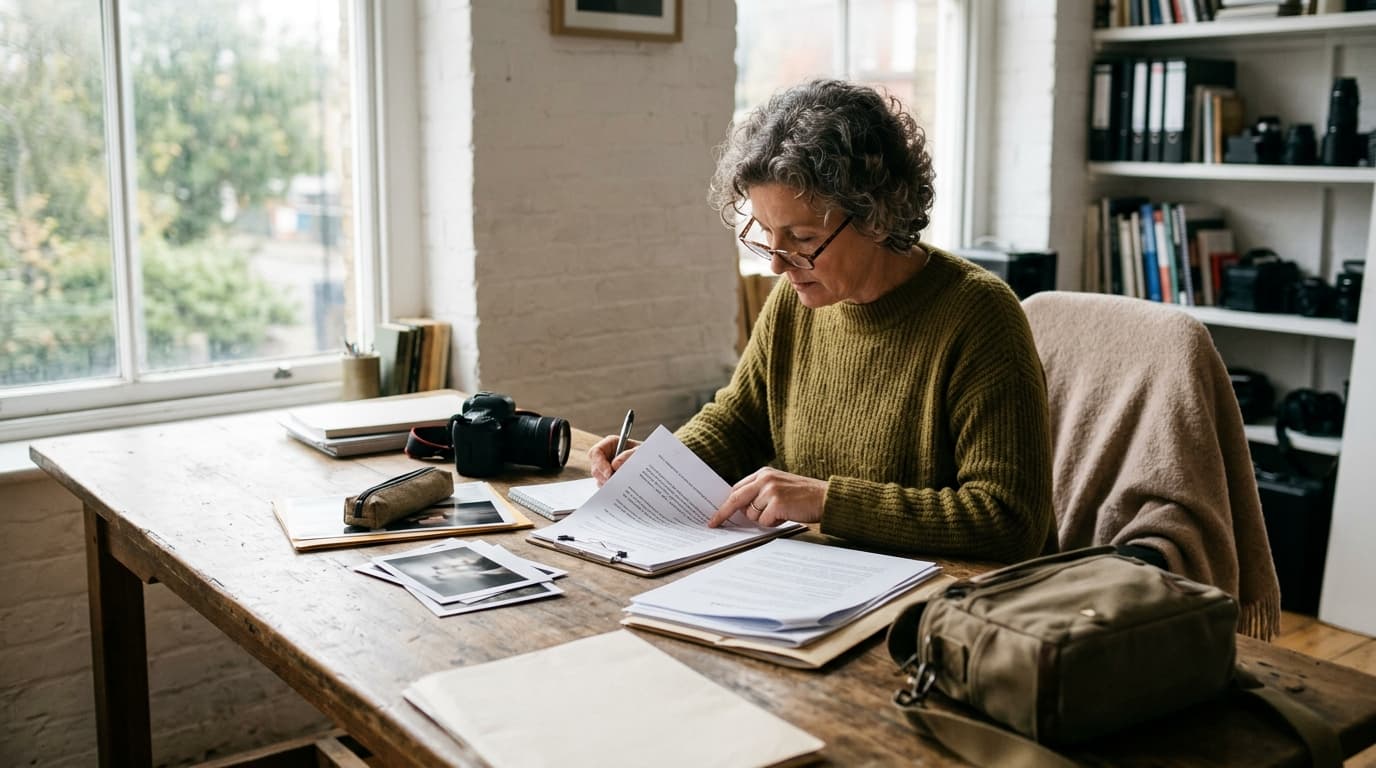
In the US, most event organizers and venues require photographers to carry at least $1,000,000 in general liability coverage and to send a certificate of insurance (COI) before load-in, and many also ask for permits and a signed vendor agreement. Those event photography insurance requirements are cheap to meet in advance and expensive to scramble for the week of the event.
Scope: this guide covers the United States only. The coverage limits, COI practices, W-9 paperwork and permit rules below reflect US venues, insurers and agencies. If you shoot in another country, the numbers and terms will differ, so check local rules first.
TL;DR
- In the US, carry general liability of $1M per occurrence and $2M aggregate, and keep a current COI ready to email in minutes.
- Ask every client who holds the permit, what the venue's vendor rules are, and whether you need to be named as additional insured, all in writing, before you sign.
- Package your paperwork into one reusable kit, because organizers hire the photographer who looks lowest-risk, not always the one with the best portfolio.
This post is general education for US-based work, not legal or insurance advice. Talk to a licensed insurance agent in your state about your own coverage.
What are the event photography insurance requirements most US organizers and venues set?
The standard US requirement is general liability insurance with $1,000,000 per occurrence and $2,000,000 aggregate, plus a COI delivered before the event. According to the Professional Photographers of America, almost all event organizers and venues require photographers they hire, or who work on their premises, to carry a minimum of $1,000,000 in general liability coverage.
The $1M/$2M structure means a single incident is covered up to $1 million, and the policy pays out up to $2 million across all incidents in a year. General liability responds to third-party claims, such as a guest who trips over a light stand, a scuffed ballroom floor, or a toppled stand that damages a client's property.
Beyond that baseline, requirements get more specific the bigger the client gets. Corporate and conference clients often want to be named as an additional insured, convention centers and hotels may ask for higher limits, and some brand activations add professional liability or cyber coverage for client data. None of this is exotic, but each item is a place where a booking can stall if you have never heard of it.
What does the coverage cost?
Less than most photographers expect. At the time of writing, PPA lists general liability starting as low as $227.25 a year for photographers with $125,000 or less in annual gross revenue, with no deductible on that coverage. For occasional shooters, Full Frame Insurance lists an event-only general liability policy at $59 for up to three days, and annual plans starting at $12 a month. Prices vary by state, revenue and provider, so treat these as ballparks and get your own quote.
What is a certificate of insurance and how do you get one fast?
A certificate of insurance is a one-page proof of coverage issued by your insurer or broker, listing your policy type, limits and effective dates. If you already have an active policy, you can usually request a COI and receive it within a business day; if you don't, you're buying coverage at short notice, which is exactly when organizers get nervous.
Three terms trip people up, so it helps to know them before the email arrives:
- Certificate holder: the venue or organizer named on the COI as the party receiving proof of coverage.
- Additional insured: a stronger status where the venue is added to your policy for claims arising from your work. Some insurers include this at no cost, while others charge a fee, so ask before you promise it.
- Waiver of subrogation and primary/non-contributory wording: language some venues request so that your policy responds first. If you see these terms, forward the venue's exact wording to your agent rather than guessing.
The practical move is to keep a PDF of your current COI in a shared folder and to ask your insurer how quickly they can issue a custom one. A fast, clean reply to the coordinator is a small signal that you run a professional operation, and coordinators remember it when they build preferred-vendor lists.
Do you need a permit to photograph an event in the US?
Sometimes, and the answer depends on whether the event is on private property or public ground. At a private venue, the venue or organizer typically holds the permits for the event, but in public parks, streets, beaches, race courses and government buildings, a commercial photography permit or written permission is often required, and rules differ by city, county, state and agency.
The mistake isn't skipping a permit so much as assuming someone else has one. A festival producer might hold an event permit that doesn't cover independent vendors, and a race director may have road closures sorted without any provision for a photographer standing on the course. The fix is a single email: Who holds the permit for this event, and does it cover contracted photographers? Keep the reply with your booking records.
What about drones and special access?
Drones are the most common surprise. A standard general liability policy may not cover drone use, and PPA notes that drone coverage is available as an add-on at extra cost, so check your policy before promising aerial shots. In the US, commercial drone flights also fall under FAA rules, including Part 107 pilot certification. Add venue bans and crowd-flight restrictions, and an aerial request in a contract can quietly become the riskiest line item you agreed to.
Credentials are another form of permission. Sports leagues, conferences and some festivals issue media or vendor credentials that dictate where you can stand, when you can shoot and sometimes what you can publish. Ask for the credential process early, because many close weeks before the event.
Which venue rules cost photographers bookings?
The rules that cost the most bookings are the ones photographers learn about too late: approved-vendor lists, exclusive photographer clauses, load-in windows, lighting restrictions and content limits. Each is simple to follow if you know it in advance and a deal-breaker if you discover it on the day.
These are the ones worth asking about during the inquiry stage:
- Approved or exclusive vendor lists: some venues only allow vetted photographers, and getting on the list often depends on your COI and references.
- Load-in, parking and access: timing windows, service-entrance rules and where gear can be staged.
- Flash, tripod and monopod rules: common in theaters, houses of worship, museums and some conference rooms. If low light is likely, review our guide to handling difficult indoor venue lighting without flash drama before you commit.
- Photography of attendees: posted notices or badge language that let you photograph guests, which matters most at conferences and festivals.
- Usage restrictions: sponsors, performers or venues may restrict how images can be published or sold.
- Sensitive areas: kitchens, back-of-house, VIP lounges and minors' areas often need explicit approval.
Put the answers in your contract. If you need a refresher on what belongs there, our breakdown of event photography contracts, usage rights and licensing covers the clauses that tie these rules to your deliverables, and the wedding photography contract checklist is a useful template for private-client work.
How do the requirements differ by event type?
The core requirement, liability coverage plus a COI, stays the same across event types, but the paperwork around it shifts. Weddings lean on venue vendor rules, corporate events on client-side procurement, sports and races on credentials and course access, and festivals on permits and sponsor rules.
- Weddings and private parties: the venue coordinator usually asks for the COI, and some venues keep a preferred-vendor list that favors photographers with a clean paperwork history.
- Corporate events and conferences: expect a procurement or vendor-onboarding form, a W-9, possibly an additional insured request, and sometimes professional liability or cyber coverage. Our post on how to get hired by event organizers explains what buyers look for beyond the portfolio.
- Conferences specifically: badge rules, session restrictions and speaker consent often matter more than lighting. The conference photography shot list for solo photographers pairs well with a pre-event rules check.
- Sports and races: credentials, course positions and safety-zone rules, plus liability coverage for working near moving athletes and vehicles.
- Festivals and brand activations: event permits, sponsor exclusivity, stage and pit rules, and wristband or access-level restrictions.
How do you build a paperwork kit that wins event bookings?
Build one folder you can send in under five minutes: a current COI, your W-9, a signed-ready contract, an equipment list, a short bio with references, and a one-page summary of how you work. Organizers choose the photographer who feels like the lowest-risk option, and a complete kit removes doubt before the conversation even reaches price.
Here is a simple order of operations that avoids last-minute scrambles:
- Before inquiries arrive: hold an active general liability policy and save a current COI. Review equipment and professional liability coverage as your gear value and client size grow.
- During the inquiry: ask who holds the permit, whether you must be named additional insured, and where the vendor rules are published.
- At contract signing: record the insurance limits, access rules and any restrictions in writing, and confirm the delivery method.
- One week out: send the COI, confirm load-in details and credentials, and save every confirmation in one thread.
- After the event: renew or adjust coverage before the next booking, not after a venue asks.
Equipment coverage deserves its own thought, since general liability won't pay to replace a camera that gets stolen or dropped. If you rely on a couple of bodies and fast lenses to deliver, price out inland marine or equipment coverage separately and compare it with what your existing policies exclude.
Does how you deliver photos affect organizer approval?
Yes, increasingly. Organizers want to know that attendees will actually receive their photos without the client's team fielding a flood of requests, so your delivery plan is part of the risk conversation, alongside insurance and permits. Bigger audiences also raise privacy questions about who can see what.
A clear answer helps: how photos get uploaded, how guests find their own images, and how long galleries stay live. Tools that let guests locate their own photos with a selfie, such as FindMe Photo, make that answer easy to explain, and our guide to event photo delivery to attendees breaks down the options. For high-volume formats, the festival photo delivery reach gap shows why this matters at scale, and the best gallery software for corporate event photographers covers the client-side controls that procurement teams ask about.
What are the most common paperwork mistakes?
The most common mistakes are buying coverage the week of the event, letting a policy lapse between seasons, and assuming the venue's permit covers you. A close fourth is agreeing to additional insured or higher-limit requests without checking whether your policy can actually deliver them.
Another is keeping details in scattered email threads. When a coordinator changes the load-in time or adds a no-flash rule, move it into your contract or a written confirmation, because verbal updates vanish when something goes wrong. A five-minute habit of replying Confirmed, thank you to every rule update protects both sides.
Finally, don't treat paperwork as a one-time hurdle. Venues revisit their vendor lists, organizers change producers, and limits that satisfied last year's client may fall short of this year's. A quick renewal check each season keeps you eligible for the bookings you've already earned.
Ready to make every event photo easy for guests to find? Once your paperwork is sorted and the booking is yours, FindMe Photo helps you deliver: upload once and every attendee finds their own photos by selfie, then shares them, so your work reaches far more people than a single gallery link ever could.
Frequently asked questions
Do event photographers need insurance in the US?
In practice, yes. Most US venues, corporate clients and event organizers will not let a photographer on site without proof of general liability coverage, and the Professional Photographers of America notes that almost all of them require at least $1,000,000. Even when nobody asks, a single tripped guest or damaged floor can cost far more than a year of premiums.
What is a certificate of insurance for a photographer?
A certificate of insurance (COI) is a one-page document issued by your insurer or broker that proves you hold a specific policy, with its limits and dates. US venues and organizers ask for it before load-in, and it often needs to name them as the certificate holder or an additional insured.
How much does event photographer insurance cost in the US?
Published US prices in 2026 vary by provider, state and revenue. PPA lists general liability starting as low as $227.25 a year for photographers earning $125,000 or less, and Full Frame Insurance lists event-only general liability at $59 for up to three days. Equipment and professional liability cost extra.
Do I need a permit to photograph an event in the US?
It depends on where you shoot. Private venues usually handle permits themselves, but public parks, streets, race courses, beaches and some government buildings often require a commercial photography permit or written permission from the city, county, state or agency in charge. Drones add their own rules. Ask the organizer who holds the permit and confirm in writing whether it covers vendors.
What is the difference between general liability and professional liability for photographers?
General liability covers third-party bodily injury and property damage, such as a guest tripping over a light stand. Professional liability (also called errors and omissions) covers claims about your work itself, such as failing to deliver photos or missing key shots. US venues almost always ask for the first, while some corporate clients also ask for the second.
Do these insurance requirements apply outside the US?
No. This guide is US-specific. The $1M/$2M limits, COI practice, W-9 paperwork and permit rules reflect US venues, insurers and agencies. Other countries have different norms, policy names and permit authorities, so ask a local broker and the venue before you quote.
Browse by topic
The new photo gallery for pro event photographers.
Expand your reach: 10× more guests open your galleries.
Why the whole room opens it
One link per event. No signup, no login, no app for your guests. Designed for mobile and access on the go.

Their face is their password. A selfie finds their photos in under 2 seconds. Selfie Search comes in every plan, including Free+.
They share it, or buy from your store. Your prices, your brand, your customers. Set up your store for digital and/or print copies connected to your Stripe.
Open your Free+ account today — every Growth feature free for 30 days — and onboard the fastest, coolest way to share your galleries.