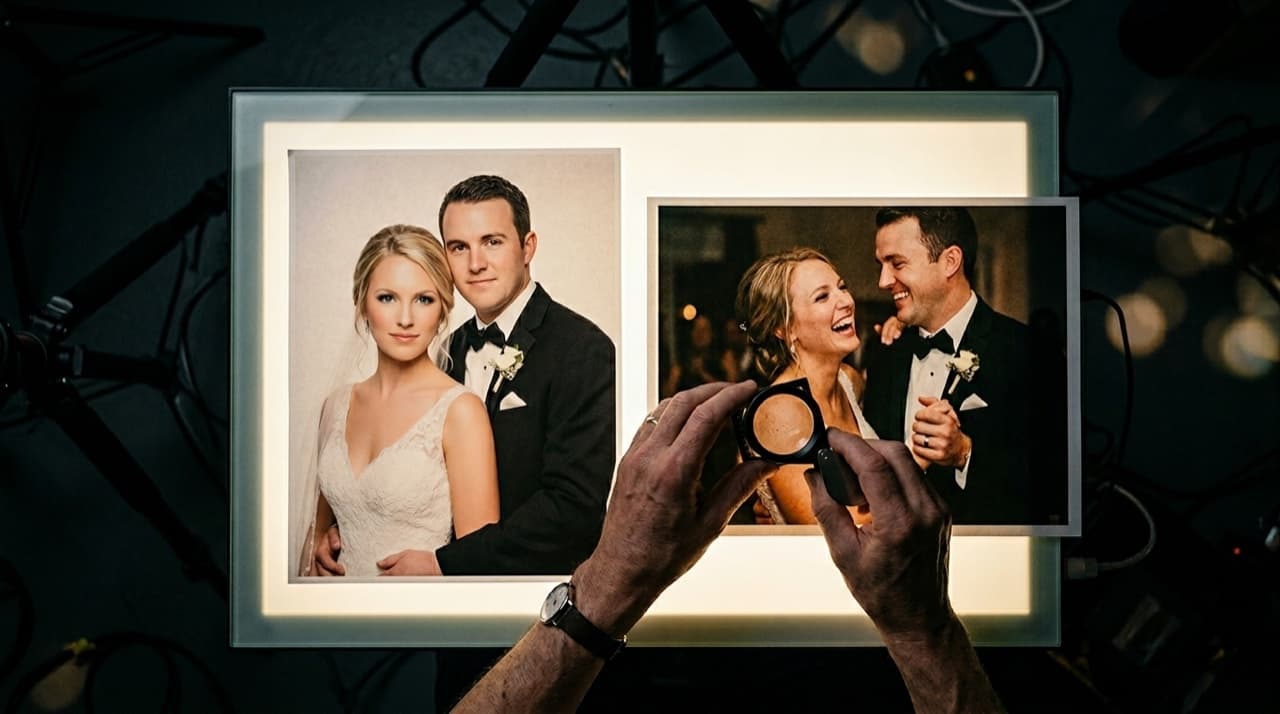
A prospective client asked me last month if I could use AI to "fill in" a missing family member who could not attend the wedding. They wanted him in the group photos. Standing next to the groom. Smiling.
This is the conversation wedding photographers are having now. And it is only going to get louder.
What AI Can Actually Do Today
The tools are real and the results are good. Midjourney and similar platforms can generate photorealistic wedding scenes from a text prompt. Photoshop's generative fill can add people, change backgrounds, and extend frames. Face-swap tools can place anyone into any image.
For photographers, AI is also producing useful workflow tools: automated culling, batch editing, sky replacement, object removal. These are different from generating fake content. Most photographers have already integrated some version of them.
The line that matters is between editing reality and fabricating it.
Editing Is Not Fabricating
Dodging and burning, color grading, removing a stray paper cup from a table — these are edits. They refine what happened. The moment still occurred. The people were there. You are not deceiving anyone about what took place that day.
Adding a person who was not present is something else. So is replacing natural light with a generated version, or compositing a sky from a different continent onto a ceremony in Ohio. The photo becomes a claim about reality that reality does not support.
Wedding photos are not commercial product shots. They are records. The couple will look at them in 20 years and remember that day. If you have fabricated parts of it, you have corrupted the record.
Where It Gets Complicated
The easy cases are clear. The middle ground is not. What about removing a closed eye? Replacing a distracting car from the background? Smoothing skin beyond what any real skin looks like? Photographers have been doing versions of these things for decades.
There is no universal standard. Every photographer has to define their own line and communicate it honestly to clients. The problem is that most do not.
Clients are starting to ask directly. "Do you use AI?" is now a common inquiry. If your answer is vague, you will lose the clients who want clarity and you will not gain anything from the ones who do not care.
Set Your Policy and Say It Out Loud
The photographers building strong reputations right now are the ones being specific. They say: I use AI for culling. I use generative fill to remove power lines or trash cans. I do not composite people or fabricate lighting. These are my standards.
Put it in your contract. Put it on your FAQ page. Say it in consultation calls when clients ask about your editing process. The clarity builds trust.
Some photographers are going further: embedding content credentials in their delivered files so clients can verify that images were captured by a real camera and edited within defined parameters. It is not mainstream yet, but it is coming.
The Request I Turned Down
I told the couple that I could not add a person who was not there. I explained that a photo claiming he was present would not be an honest record of their day. They understood. They ended up doing a separate portrait session with the family member later, which I shot and delivered as a distinct set.
Better outcome for everyone. The wedding photos stayed honest. The family got the image they wanted. No one had to wonder, twenty years from now, which parts of the record were real.
AI is not going away. Your position on it is a choice you are making whether you articulate it or not. Articulate it.
Browse by topic
The new photo gallery for pro event photographers.
Expand your reach: 10× more guests open your galleries.
Why the whole room opens it
One link per event. No signup, no login, no app for your guests. Designed for mobile and access on the go.

Their face is their password. A selfie finds their photos in under 2 seconds. Selfie Search comes in every plan, including Free+.
They share it, or buy from your store. Your prices, your brand, your customers. Set up your store for digital and/or print copies connected to your Stripe.
Open your Free+ account today — every Growth feature free for 30 days — and onboard the fastest, coolest way to share your galleries.