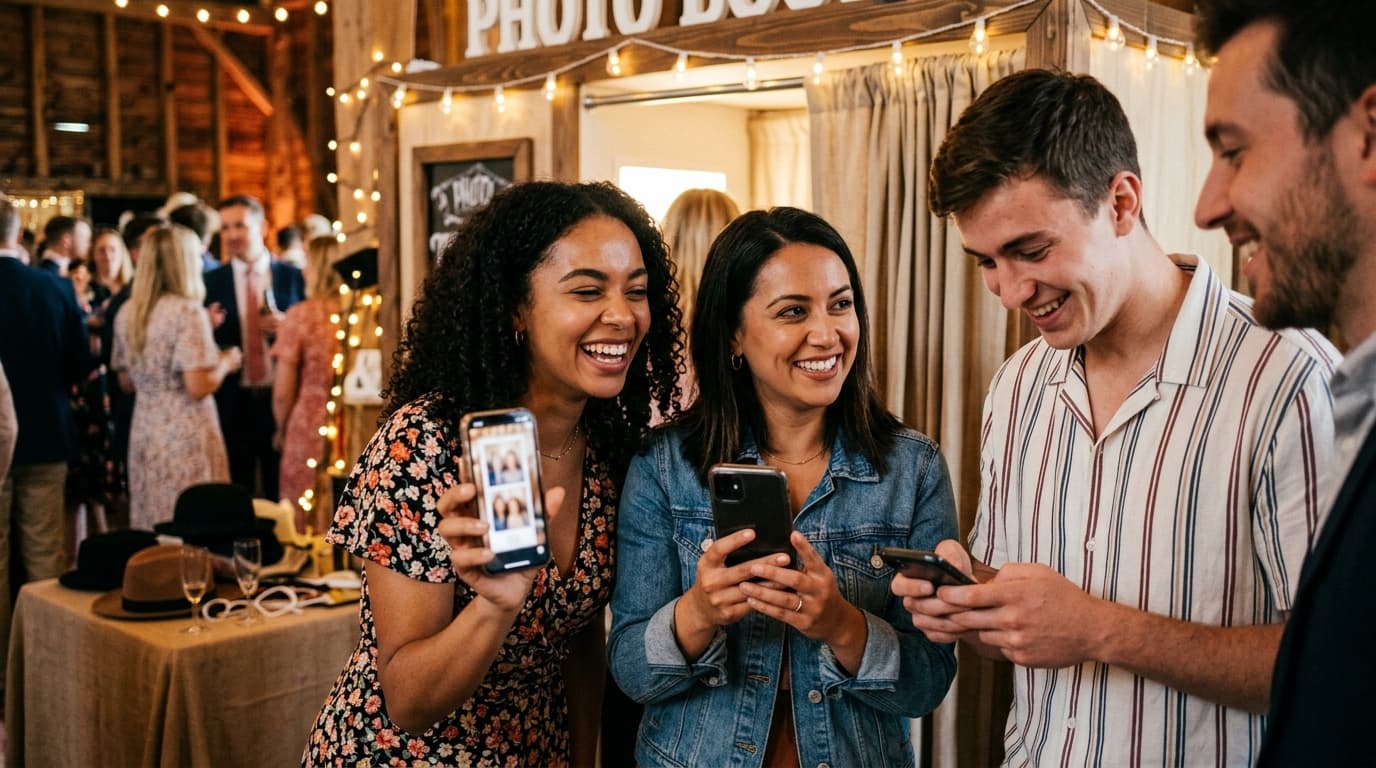
Photo booth software wins the instant-delivery race: guests typically get a shareable link, GIF, or print within seconds of stepping into the frame. Event gallery software wins on coverage: it holds every image a roaming photographer captures across the whole event, then lets each guest find their own photos by face, sometimes days later. The honest answer to “photo booth vs event gallery software” is that they solve two different halves of the same delivery problem.
TL;DR
- Photo booth vendors built instant delivery into their software years ago; most kiosks hand guests a link or branded microsite before they've walked away from the camera.
- Roaming event photographers never solved that problem the same way. Galleries traditionally shipped days or weeks after the event, long after the moment's urgency, and its shareability, had faded.
- The fastest events now pair a booth's instant gratification with AI face-search gallery software, so every camera at the event, not just the booth, delivers photos in near real time.
Photo Booth vs Event Gallery Software: What's the Real Difference?
Photo booth software runs a fixed station, captures a posed shot, and hands it back instantly through print, text, or a branded link. Event gallery software runs behind a roaming photographer's camera, collecting hundreds or thousands of candid images across an entire ceremony, conference, or race, then organizing them into a searchable gallery guests browse afterward.
The two categories were never built to compete with each other. One was built to make a single, fun interaction feel instant. The other was built to manage volume, variety, and coverage across hours of unpredictable moments a fixed kiosk will never see.
Why Did Photo Booth Software Solve Instant Delivery First?
Photo booth vendors treated instant delivery as the entire product, since the fun of a booth photo depends on getting it into someone's hands, or their phone, before the next group steps up. Nearly every modern booth ships with SMS, AirDrop, or email delivery built in, and premium activation packages typically add a branded microsite guests can revisit later for downloads, GIFs, and boomerangs.
Because delivery speed was the selling point from day one, booth companies engineered their entire software stack around it. That is also why booths feel so effortless to guests: there is no gallery to search, no faces to match, just one photo handed straight back to the person who took it.
What Are Roaming Event Photographers Still Missing?
Roaming photographers capture the moments a booth never sees: the ceremony, the keynote, the finish line, the candid laugh across the room. But most still deliver those photos through a single gallery link days after the event ends, which is the opposite of what photo booth software already fixed for the kiosk experience.
That gap between capture and delivery is why guests are often scrolling through booth photos on their phones before they've seen a single frame from the photographer they actually hired. If you want a fuller breakdown of what guests expect from a modern gallery link, see our guide to the best event photo sharing apps for 2026.
How Do Branded Microsites and QR Links Fit Into Delivery?
A branded microsite gives a brand activation a home base guests can return to for downloads, and a QR code is simply the shortcut that gets someone from the physical booth to that page. Neither one is the delivery mechanism itself; the real work happens in the software underneath that hosts, organizes, and serves the images fast enough that guests bother opening the link in the first place.
Photographers running weddings and parties often lean on similar shortcuts for their own galleries. If you want the full playbook on when a printed code helps and when it just adds friction, read our QR code playbook for photographers.
Which Option Actually Gets Photos to Guests Faster?
Straight photo booth software wins on raw speed for the single shot it captures, but that speed only covers the few seconds a guest spends in front of that one camera. Event gallery software with AI face search now closes most of that gap for roaming photographers, turning what used to be a multi-day wait into a same-day, sometimes same-hour, find-your-photos experience across the entire event.
Tools like FindMe Photo let photographers export straight from Lightroom Classic and put a searchable gallery live while the event is still happening, so every guest, not just the ones who visited the booth, gets an instant-delivery experience. That matters most at events with real scale, which is why corporate teams and festival organizers now ask about delivery speed before they ask about coverage. See our guides on delivering corporate event photos to every attendee and getting festival photos to thousands of attendees fast.
Should You Combine Photo Booth Software and Event Gallery Software?
Yes, pairing them covers both halves of the guest experience: a fun instant memento from the booth, and a complete, searchable record of the whole event from the roaming photographer. Organizers increasingly want one vendor who can promise fast delivery everywhere, not just at a single kiosk, which is changing how photographers pitch themselves for bigger bookings.
If you photograph corporate activations, festivals, or conferences and want to be the photographer organizers call first, our guide on how to get hired by event organizers covers what planners actually screen for. And if you're still weighing gallery platforms before you commit to one, our roundup of free event photo gallery platforms is a useful starting point.
Whichever setup you run, the guest expectation is the same one photo booths trained everyone to have: find your photo now, not next week. Photographers who close that gap with an AI-searchable gallery, not just a booth, are the ones getting rebooked for the next event.
Frequently asked questions
Is photo booth software the same as event gallery software?
No. Photo booth software runs a fixed station and hands back a single posed shot in seconds. Event gallery software runs behind a roaming photographer, collects hundreds or thousands of candid images across the whole event, and organizes them into a searchable gallery guests browse later.
Do event photographers need both photo booth software and gallery software?
Not always, but pairing them covers more of the guest experience. A booth gives attendees a fun instant memento, while gallery software with face search gets every candid moment a roaming photographer captured into guests' hands, usually the same day.
How fast should event photo delivery be in 2026?
Guests now expect a link within minutes for a booth photo and within hours, not days, for a full event gallery. Photographers who ship galleries while the event is still happening or the same evening consistently see higher download and share rates.
Can guests find their own photos without visiting a photo booth?
Yes. AI face-search gallery software lets any attendee upload a selfie and pull every candid photo of themselves from the full event, even if they never stepped in front of a booth camera.
What is the fastest way to deliver event photos to attendees?
The fastest setups skip manual sorting entirely. Photographers export a culled set straight from their editing software into an AI-searchable gallery, so guests find and share their own photos within minutes of upload instead of waiting for a manual link.
Browse by topic
The new photo gallery for pro event photographers.
Expand your reach: 10× more guests open your galleries.
Why the whole room opens it
One link per event. No signup, no login, no app for your guests. Designed for mobile and access on the go.

Their face is their password. A selfie finds their photos in under 2 seconds. Selfie Search comes in every plan, including Free+.
They share it, or buy from your store. Your prices, your brand, your customers. Set up your store for digital and/or print copies connected to your Stripe.
Open your Free+ account today — every Growth feature free for 30 days — and onboard the fastest, coolest way to share your galleries.