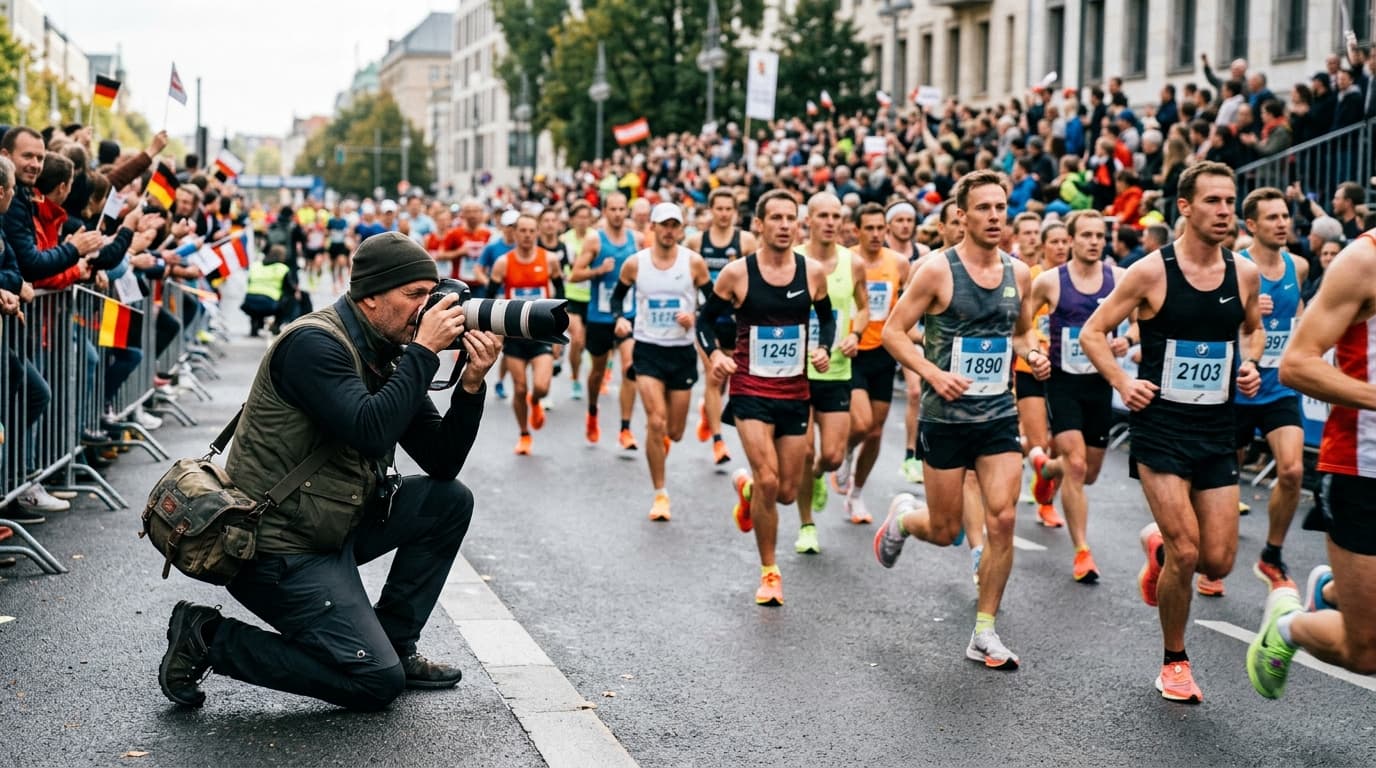
FlashFrame is a bib-recognition and photo-tagging tool built for race and endurance-event photographers who need to match thousands of runners to their images quickly. It handles OCR-based bib matching reasonably well in clean, well-lit conditions, but it isn't a full gallery or storefront, so photographers who also shoot weddings, corporate events, or festivals usually need to pair it with something broader.
TL;DR
- FlashFrame focuses on bib-number OCR and tagging, not full gallery delivery, checkout, or guest sharing.
- Accuracy drops fast when bibs are muddy, folded, angled away from the camera, or missing entirely, which is common outside road races.
- Photographers who shoot more than one event type often get more mileage from a face-search delivery tool that doesn't depend on a printed number at all.
FlashFrame Review: What Does It Actually Do for Race Photographers?
In this FlashFrame review, the short version is that it's a tagging engine, not a full sales platform. It reads bib numbers off race photos using optical character recognition, then groups images by runner so you don't have to scroll through thousands of unsorted frames after a race.
For photographers shooting marathons, 10Ks, or triathlons with clear bib fields, this can save real time on the sorting side. The tool essentially replaces the old manual process of eyeballing bib numbers frame by frame, which used to eat hours after every event.
How Accurate Is FlashFrame's Bib Recognition?
FlashFrame's accuracy depends almost entirely on how visible and legible the bib is in each frame. On a flat, well-lit road course with runners facing forward, recognition rates are generally solid.
The problems show up at trail races, obstacle courses, and triathlons, where bibs get folded over waistbands, splashed with mud, or hidden under jackets and hydration packs. Crowded starts and finish-line chutes also introduce motion blur and overlapping runners, both of which confuse OCR-based matching. Most photographers who rely on FlashFrame still budget time for a manual review pass to catch the misses, which cuts into the time savings the tool is supposed to provide.
What Does FlashFrame Cost in 2026?
Pricing for bib-tagging tools in this category typically follows a per-event or tiered subscription model, scaling with photo volume or number of races processed per month. Because pricing pages change often and FlashFrame doesn't publish a fixed public rate card, it's worth checking their current site directly before budgeting a season around it rather than relying on secondhand numbers.
What matters more than the exact price is what's included. If tagging is the only feature in the tier you're paying for, you'll still need a separate line item for gallery hosting, checkout, and delivery, which changes the real cost of running an event through the tool.
Does FlashFrame Handle Sales and Delivery, or Just Tagging?
FlashFrame is primarily a sorting layer that sits before your sales workflow, not a replacement for it. Once photos are tagged by bib number, you still need somewhere for runners to actually browse, buy, and download their images.
That means most photographers stack FlashFrame on top of an existing gallery platform, which adds a second subscription and a second login for both the photographer and the runner. If you're already comparing full gallery options for race day, it's worth reading how gallery software built specifically for sports photographers stacks up before adding a separate tagging tool on top.
FlashFrame vs Face-Search Tools: Which Fits Race Photographers Who Sell?
Bib-based tagging and face-search tagging solve the same problem, matching a runner to their photos, but they fail differently. Bib recognition breaks down when the number isn't visible; face search breaks down when a runner's face is turned away or obscured by sunglasses and a hat, which happens less often at a finish line than a hidden bib does.
For events where bibs are inconsistent, small, or skipped altogether, like community fun runs, obstacle races, and trail events, a face or selfie-search approach tends to catch more usable matches. FindMe Photo runs this way, letting runners find their own photos by uploading a selfie instead of relying on a printed number, and it works across race day plus any other event type a photographer shoots that season. If you want a deeper breakdown of how selfie-search tools compare on accuracy and setup time, this comparison of AI selfie-search alternatives is a useful next read, and so is this piece on getting race photos in front of runners fast.
Who Should Actually Use FlashFrame?
FlashFrame makes the most sense for photographers who shoot large road races almost exclusively, where bibs are big, clean, and forward-facing for most of the course. If that's your entire business, the tagging speed can genuinely cut down post-race sorting time.
It makes less sense for photographers who split their calendar across trail races, corporate 5Ks, festivals, or weddings, since you'd be running a bib-only tool for part of your work and something else entirely for the rest. Photographers evaluating school and youth sports photography, where bib numbers often aren't used at all, may find more direct answers in this GotPhoto vs Zenfolio comparison for school sports.
Does Faster Tagging Actually Lead to More Sales?
Tagging speed only matters if it gets photos in front of runners while they still care about the race. Delivery speed and how easily attendees can find their own images are consistently tied to how many photos actually get viewed, shared, and purchased, a pattern that shows up across event photography broadly, not just races. For more on how delivery speed and findability affect download rates, this breakdown of event photography engagement metrics covers the numbers side of that in more depth.
If FlashFrame tags a race in an hour but the gallery it feeds into takes days to go live, the speed advantage disappears. The tagging step and the delivery step need to move at the same pace, or runners lose interest before they ever see a preview.
FlashFrame Review: The Bottom Line for 2026
FlashFrame does one job, bib-number tagging, and does it decently well when bibs are clean and visible. It's not trying to be a full gallery, storefront, or delivery system, and treating it like one will leave gaps in your workflow.
If your race calendar is mostly clean road courses, it can save sorting time worth paying for. If your events are messier, mixed, or spread across more than just races, a face-search delivery tool that works the same way at every event type, from a marathon finish line to a corporate 5K to a wedding reception, is worth testing instead of running two separate systems.
Photographers who want one workflow that covers races, weddings, corporate events, and festivals without swapping tools between event types can see how FindMe Photo handles selfie-based delivery at findme.photo.
Frequently asked questions
Is FlashFrame good for marathon photographers?
FlashFrame works reasonably well for marathons and road races where bibs are large, clean, and facing the camera. It struggles more at trail runs, triathlons, or obstacle races where bibs get muddy, folded, or hidden under jackets.
Does FlashFrame replace a gallery platform like Pic-Time or Pixieset?
No. FlashFrame is primarily a tagging and sorting layer, not a full storefront. Most photographers still need a separate gallery and checkout platform to actually deliver and sell photos to runners.
How accurate is bib number recognition software in general?
Accuracy depends heavily on bib design, lighting, and camera angle, and no OCR-based tool hits 100% in real race conditions. Photographers typically still need a manual review pass to catch missed or misread bibs.
What is the best alternative to FlashFrame for race photo delivery?
Face-search tools that don't rely on visible bib numbers, such as FindMe Photo, tend to work better for events where bibs are inconsistent, obscured, or not used at all, like trail races and community fun runs.
Can FlashFrame tag photos without visible bib numbers?
Generally no, since its core matching method depends on reading printed bib numbers. If a runner's bib isn't visible in a frame, that photo typically won't get tagged to them automatically.
Browse by topic
The new photo gallery for pro event photographers.
Expand your reach: 10× more guests open your galleries.
Why the whole room opens it
One link per event. No signup, no login, no app for your guests. Designed for mobile and access on the go.

Their face is their password. A selfie finds their photos in under 2 seconds. Selfie Search comes in every plan, including Free+.
They share it, or buy from your store. Your prices, your brand, your customers. Set up your store for digital and/or print copies connected to your Stripe.
Open your Free+ account today, with the top premium features included, and onboard the fastest, coolest way to share your galleries.