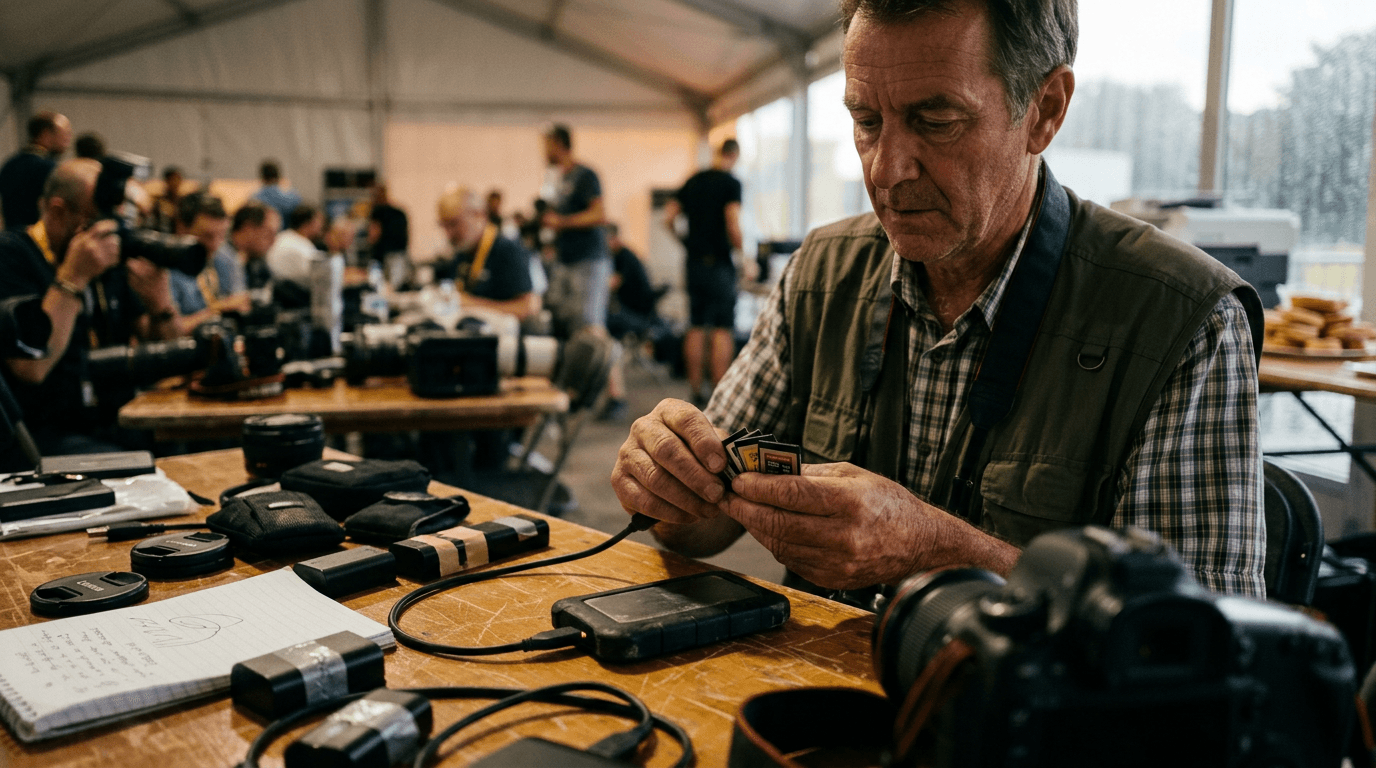
The best photo delivery software for sports photographers in 2026 pairs fast bulk uploads with AI search, so athletes, parents, and race participants find their own photos without scrolling through thousands of frames. Pixieset, Pic-Time, CloudSpot, and FindMe Photo all handle high-volume events, but the right choice depends on whether you shoot team sports, marathons, or motorsport, and how your subjects need to search: by name, bib number, or selfie.
TL;DR
- Sports and race delivery software needs bulk-upload speed, mobile-first galleries, and search options beyond names, since bib numbers, team rosters, and selfies matter more than guest lists.
- Pixieset, Pic-Time, and CloudSpot cover general event galleries well, while dedicated bib-tagging tools like RaceTagger or TagMyRun add the race-specific metadata a gallery alone cannot generate.
- AI selfie search, like the layer FindMe Photo adds on top of your Lightroom Classic export, lets any attendee, racer, or teammate find their photos in seconds without a bib number, a QR code, or a name search.
What Is the Best Photo Delivery Software for Sports Photographers in 2026?
The best photo delivery software for sports photographers in 2026 is whichever platform lets you upload straight from Lightroom Classic or a card, then lets every athlete, coach, or race finisher search and download their own images without you manually sorting thousands of frames by hand. For team sports and tournaments, that usually means gallery software like Pixieset, Pic-Time, or CloudSpot, paired with AI face or selfie search so parents in the stands can find their kid's highlight without knowing which folder it landed in.
For races, the calculation shifts slightly. Names alone are hard to search when a marathon has forty runners sharing the same first name, so delivery software for races usually adds bib-number recognition on top of a standard gallery. There is no single winner for every discipline; the right stack depends on whether your subjects can search by roster, by bib, or only by their own face.
Why Do Sports and Race Events Need Different Delivery Software Than Weddings?
Sports and race events produce far higher photo volumes and far less predictable subject identification than weddings, since a single tournament or marathon can generate thousands of frames of hundreds of strangers who don't know each other by name. A gallery built for a 500-photo wedding often buckles under a 5,000-photo track meet, and search by guest name, which works fine at a reception, fails outright when forty entrants share a first name.
That volume problem starts before delivery even begins, at the culling stage. If you are still reviewing every burst frame by eye, the culling speed comparison between Photo Mechanic and Lightroom is worth reading before you touch delivery software at all, because a slow cull delays everything downstream.
What Features Should You Look for in Sports and Race Photo Delivery Software?
The features that matter most for sports and race photo delivery software are bulk-upload speed, mobile-first galleries, and search that works for crowds rather than guest lists. Beyond that, watermarking for pre-purchase previews and print or digital sales tie the whole thing to revenue rather than just a courtesy download link.
- Bulk upload directly from Lightroom Classic or a folder export, without a per-image manual step
- Mobile-optimized galleries, since most parents, teammates, and runners open the link on a phone at the venue
- Search beyond first and last name: bib number, team, jersey number, or selfie
- Fast preview rendering so a gallery of 3,000+ images doesn't stall on a stadium WiFi connection
- Built-in or connected print and digital sales so delivery also generates revenue
How Do Pixieset, Pic-Time, and CloudSpot Compare for Sports and Race Delivery?
Pixieset, Pic-Time, and CloudSpot all offer solid gallery hosting for sports and race photographers, but they differ on price, print fulfillment, and how gracefully search holds up when a gallery grows past a few thousand images. Pixieset tends to be the most affordable starting point with clean mobile galleries, Pic-Time leans into print sales and client experience, and CloudSpot markets itself on simplicity and flat pricing.
None of the three were built specifically for bib numbers or jersey rosters, so most sports and race photographers pair one of them with a separate tagging step. If you want the full side-by-side breakdown of pricing, storage limits, and sales tools, the CloudSpot vs Pic-Time vs Pixieset comparison and the Pixieset vs ShootProof vs Pic-Time breakdown both cover the details that matter for high-volume events, not just weddings.
How Does Bib Number Recognition Fit Into a Race Photo Delivery Workflow?
Bib number recognition software reads runners' or drivers' race numbers and writes that data into your photos' metadata, so your gallery platform can let each participant search by their bib instead of scrolling a gallery of thousands. Tools built for this range from free web-based options for basic detection to desktop apps that run locally and match numbers against a CSV starting list, adding driver or runner names automatically.
The catch is that bib detection only works if the number is visible, unobstructed, and legible, which is rarely true for every frame in a race with crowds, weather, or motion blur. That is one reason many race photographers now add a selfie-based search layer as a backup, so a runner whose bib was blocked by another racer can still find themselves. For a deeper walkthrough of the full runner-facing side of this problem, see how to share race photos so runners find themselves fast.
How Fast Should You Deliver Sports and Race Photos After an Event?
Sports and race photo delivery works best measured in hours, not days, because a team's social media manager or a runner's excitement about their finish-line photo fades quickly once the event ends. A strong workflow delivers hero highlights the same night and a full curated gallery within 24 hours, which is the benchmark that keeps teams, leagues, and race organizers booking you again.
Delivery speed is really a function of everything upstream: how fast you cull, how fast you edit, and how fast your gallery renders previews for a crowd hitting the link at once. If any one of those stages is slow, the whole chain slows down, no matter how good your final gallery looks. For a broader look at platforms built for exactly this kind of speed, this roundup of event photo sharing apps compares options across sports, festivals, and corporate events.
Can AI Selfie Search Replace Bib Numbers for Faster Sports and Race Photo Delivery?
AI selfie search can replace or supplement bib-number search for sports and race photo delivery, because it lets any participant, spectator, or teammate find their photos by taking a selfie, without needing a bib number, a jersey number, or a QR code to hunt down. That matters most at events where organized bib or roster data doesn't exist at all, like youth leagues, fun runs, and pickup tournaments.
FindMe Photo runs this way: it works directly from your AI assistant, exports straight from Lightroom Classic, and lets every guest, athlete, or racer find their own shots in seconds through a face or selfie search, no separate app or manual tagging pass required. For photographers already stretched thin between shooting, culling, and editing, that removes one more manual step from the delivery chain.
Frequently asked questions
What software do sports photographers use to deliver photos fast?
Most sports photographers use a gallery platform such as Pixieset, Pic-Time, or CloudSpot for hosting and mobile downloads, often combined with a culling tool to trim volume before upload and an AI search layer so athletes and parents can find themselves without scrolling.
How do runners find their race photos online?
Runners typically search a results-linked gallery by bib number, name, or finish time, though a growing number of race photographers now offer selfie-based AI search so runners can find their photos without knowing their bib number at all.
Is Pixieset good for sports and race photography delivery?
Pixieset works well for smaller sports and race galleries thanks to its clean mobile interface and built-in print sales, though high-volume events with 5,000 or more images often need a dedicated bib-tagging or AI search tool layered on top to keep search fast.
How much does race photo delivery software cost?
Pricing ranges from free tools like TagMyRun to one-time packs around €39-279 for local tools like RaceTagger, up to monthly subscriptions from $10 to $299 for cloud-based number recognition, depending on volume and whether processing happens locally or in the cloud.
Can AI find an athlete in a photo without a bib number?
Yes. AI face and selfie search can match an athlete or attendee across an entire event gallery from a single selfie, independent of bib numbers, jersey numbers, or names, which is especially useful for youth leagues and fun runs without official timing data.
Browse by topic
The new photo gallery for pro event photographers.
Expand your reach: 10× more guests open your galleries.
Why the whole room opens it
One link per event. No signup, no login, no app for your guests. Designed for mobile and access on the go.

Their face is their password. A selfie finds their photos in under 2 seconds. Selfie Search comes in every plan, including Free+.
They share it, or buy from your store. Your prices, your brand, your customers. Set up your store for digital and/or print copies connected to your Stripe.
Open your Free+ account today — every Growth feature free for 30 days — and onboard the fastest, coolest way to share your galleries.